Harvest.Record.Revise.
The Dalvera methodology is built on three disciplines: understanding what a person actually eats across a representative week, building a seasonal plan from that evidence, and revising the plan periodically as the client’s habits and the Romanian market calendar evolve.
A documented, six-stage process for each client engagement.
Client Intake & Log Preparation
The first stage is administrative and preparatory. Following initial contact and a brief orientation exchange, the client receives a structured 7-day intake log: a formatted document in which meals, snacks, and food preparation details are recorded over one representative week.
The log captures food items, portion estimates (not calorie-counted), eating times, and basic preparation notes. Clients are encouraged to record the week honestly rather than attempt to improve their diet in advance of the consultation. An unfiltered picture of current habits is the most useful starting point.

Intake Review & Food-Group Mapping
The 90-minute initial consultation proceeds through a structured review of the completed log. The Dalvera food-group mapping framework categorises each day’s entries by the standard food groups: vegetables, fruits, whole grains, protein sources, dairy and fermented foods, and fats.
The mapping is visual as well as written — a chart produced during the session shows the distribution of food groups across the week at a glance. Imbalances, gaps, and notable patterns are identified and discussed. This stage produces the written intake summary delivered to the client within two working days.

Seasonal Plan Composition
The seasonal plan is composed in the days following the initial consultation. It is a written document of 4–8 pages that translates the intake review findings into concrete food recommendations aligned with what is available in the Romanian market during the current quarter.
The plan includes: a daily food-group allocation framework, a suggested vegetable and fruit rotation for the season, whole-grain options aligned with Romanian shopping habits, and practical notes on food preparation and timing. For clients on the active-lifestyle track, additional guidance on food timing around physical activity is included.
Food-Source Review & Traceability
Where a client’s dietary plan involves specific food items or categories of particular interest — fermented foods, named legume varieties, specialty grains — the practice maintains a regional sourcing overview for Romanian markets.
This sourcing overview is not a commercial arrangement but a reference tool: a documented map of Romanian market availability by season and sector, updated each year. It allows the nutrition professional to make recommendations that are genuinely achievable within the Bucharest and regional shopping context, not abstract ideals.

Four-Week Follow-Up Review
Four weeks after the seasonal plan is delivered, a follow-up session is conducted. The session reviews how the plan has been implemented in practice: what food choices shifted, which recommendations proved straightforward to adopt, and where adjustments are needed.
The follow-up produces a brief written revision note to the plan — a record of changes made at this stage and the reasons for them. This note is archived in the client file and forms part of the longitudinal record that informs subsequent seasonal plan editions.

Archive & Ongoing Seasonal Revision
The client file is archived at the conclusion of the initial engagement. Clients who continue with the seasonal programme receive updated plans at each quarter: a new document built on the accumulated understanding of their food preferences, lifestyle changes, and the evolving Romanian market calendar.
The practice archive, which now contains over 1,400 client files, is consulted each year in composing the four Dalvera seasonal menu editions. Patterns observed across the client population — common food-group gaps, seasonal eating shifts, active-lifestyle correlations — inform the edition content, which is drawn from both this archive and current nutritional research literature.

How the Dalvera practice stays current with nutritional research.
Published Literature Review
Recommendations within Dalvera plans are selected based on published nutritional research. Each annual revision of the seasonal menu editions includes a review of current peer-reviewed literature on food group roles, micronutrient contribution of common Romanian produce, and dietary guidance for active adults.
Independent Batch Verification
Where the practice recommends specific food-supplement categories to complement a balanced daily diet, the ingredient profiles referenced are selected based on published nutritional research and undergo independent batch verification for quality and labelling accuracy.
Annual Continuing Education
The nutrition professional leading the Dalvera practice completes a structured continuing education review each year, covering current developments in dietary guidance, food science, and published nutritional evidence relevant to the Romanian adult population and active lifestyle cohorts.
The Romanian food calendar as the foundation of every seasonal plan.
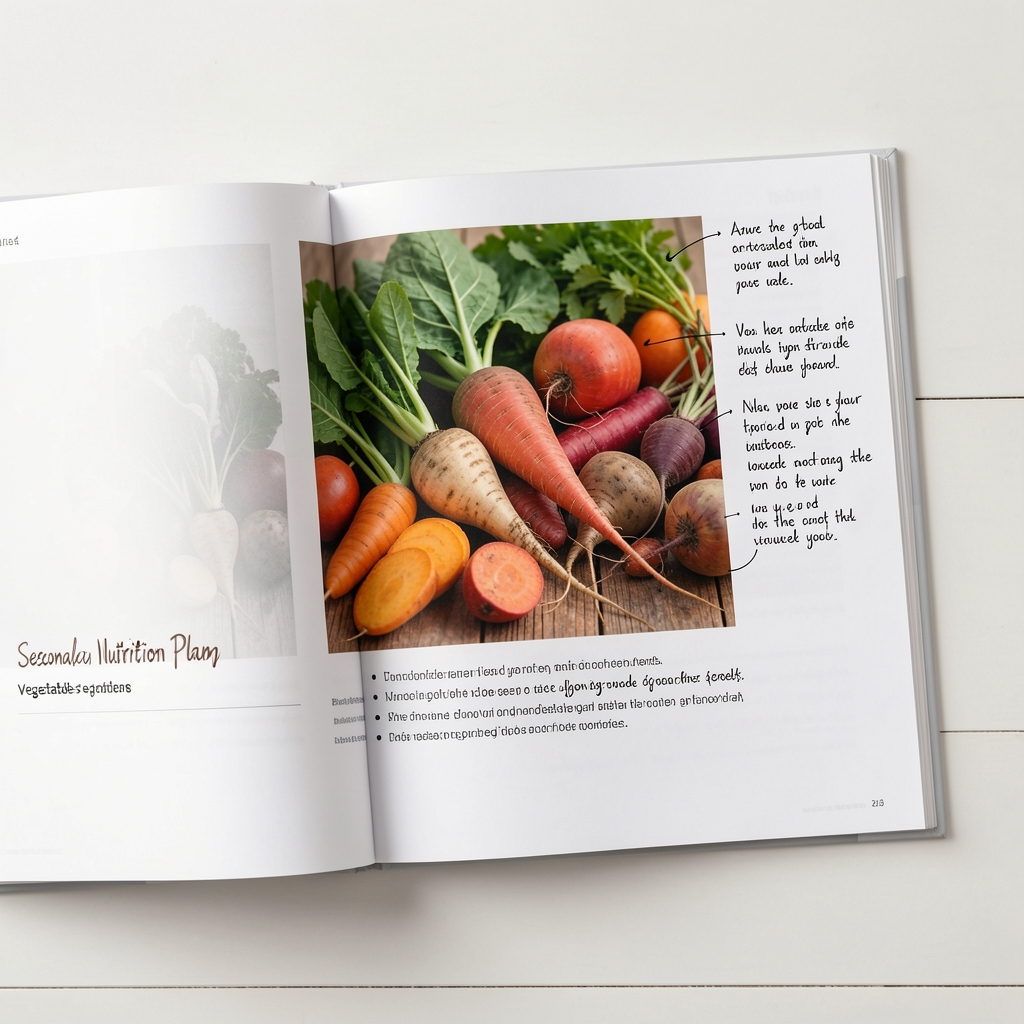
Romania’s agricultural calendar produces a distinct seasonal pattern in food availability. Spring brings fresh leafy greens, young root vegetables, and wild herbs. Summer is the fruit season: tomatoes, cucumbers, stone fruits, and berries. Autumn delivers the year’s most nutritionally dense produce — root vegetables, legumes, brassicas, and squashes. Winter centres on storage crops: fermented vegetables, dried pulses, and preserved fruits.
Each Dalvera seasonal edition maps these availability windows and aligns dietary recommendations accordingly. The editions draw on produce availability in Bucharest’s central and neighbourhood markets, as well as the wider Romanian regional supply that reaches the city during peak season.
Active ingredients referenced in any supplementary guidance are sourced from documented suppliers, with each batch accompanied by a certificate of composition. Sourcing prioritises suppliers whose facilities maintain food-grade processing standards.
Leafy greens, asparagus, radishes, green onions, sorrel, early strawberries, wild garlic, fresh dill.
Tomatoes, cucumbers, courgette, sweet peppers, plums, peaches, watermelon, corn, fresh beans.
Squash, beetroot, parsnip, celeriac, apples, pears, walnuts, cabbage, broccoli, lentils.
Sauerkraut, dried pulses, carrots, onions, garlic, stored apples and pears, root vegetables.
The documentation and verification standards maintained by the practice.
Written Plan Delivery
Every seasonal plan and intake summary is delivered as a written document, not a verbal recommendation. The written record becomes part of the client archive.
Revision Notation
Every revision to a plan is annotated with a revision number and date. The client file shows the complete history of plan changes from the initial assessment forward.
Research Attribution
Claims about the nutritional role of specific foods or food groups in seasonal editions are accompanied by a reference to the published source used. No unsubstantiated assertions are included.
Data Retention
Client files are retained for seven years in accordance with Romanian data-retention standards for personal records held by nutrition professionals. Archive access is detailed in the privacy policy.
Questions about the Dalvera approach.
A plan produced before the diet is documented is, at best, a generic guide — it may not address the actual gaps in the client’s eating. Documentation first means the seasonal plan is a specific response to a specific diet, not a standardised template. It is also more efficient: the plan changes arise from observed facts rather than assumptions about what the client might be eating.
Body weight awareness within the Dalvera practice is approached through food composition and food-group balance rather than through restriction. The evidence base consulted is consistent on this: a varied and balanced diet, seasonally aligned and with adequate representation of vegetables, fruits, legumes, and whole grains, supports healthy body weight over time without requiring the caloric monitoring that most clients find unsustainable.
Standard dietary advice tends to be year-round and generic — it does not account for the fact that Romanian supermarkets and markets look radically different in January than in August. The Dalvera seasonal editions are built specifically around what is actually available in Bucharest and the Romanian regions each quarter, making the recommendations practical rather than aspirational.
Where relevant, the practice may note food-supplement categories that fall within the food-supplement classification and complement a balanced daily diet. Dalvera products are nutritional food-supplements registered with the applicable local regulatory authority under food-supplement classification. Products meet compositional and labelling requirements for nutritional supplement categories. We recommend speaking with a qualified wellness or nutrition professional before introducing any supplement to your daily routine, particularly if you have specific dietary requirements.